Friday, 15 April 2011
Photographs as Narratives
I was really pleased to find these photos all taken from "The Family of Man." This is effectively a photogaphy book first published by New York's Museum of Modern Art in 1955 and now in its 30th edition. Apparently every one of the 503 images displayed at the museum's exhibition have been reproduced in the book and these represent the "full gamut of life from birth to death with an emphasis on daily relationships" according to the book itself. Many of the photographs I've looked at really do echo what Montaigne once said: "every man beareth the whole stamp of the human condition." Interestingly he is aptly quoted in the book; a perfect story of mankind.
Monday, 11 April 2011
The Language of the Landscape
I discovered this poem some time ago and I keep returning to it. It's one of those voices that resonate long after the engagement with the work.
From March '79
Tired of all who came
with words, words but no language,
I went to the snow-covered island.
The wild does not have words.
The unwritten pages spread themselves
out in all directions!
I come across the marks
of roe deer's hooves in the snow.
Language but no words.
(Tomas Transtromer)
From March '79
Tired of all who came
with words, words but no language,
I went to the snow-covered island.
The wild does not have words.
The unwritten pages spread themselves
out in all directions!
I come across the marks
of roe deer's hooves in the snow.
Language but no words.
(Tomas Transtromer)
Thursday, 7 April 2011
A Great Idea at a Railway Station in 1935
It's incredible to think that such a fine publishing house as Penguin Books all started in 1935 while Allen Lane was waiting for a train at Exeter station in Devon. I actually discovered this article on the back cover of the novel I'm reading at the moment. He clearly had a great idea and was able to see a definite niche in the market. Walk into any bookshop in the UK today to see just how popular Penguin paperbacks are today.
"In 1935, if you wanted to read a good book, you needed either a lot of money or a library card. Cheap paperbacks were available, but their poor production generally tended to mirror the quality between the covers.
Penguin paperbacks were the brainchild of Allen Lane, then a director of The Bodley Head. After a weekend visiting Agatha Christie in Devon, he found himself on a platform at Exeter station searching its bookstall for something to read on his journey back to London, but discovered only popular magazines and reprints of Victorian novels.
Appalled by the selection on offer, Lane decided that good quality contemporary fiction should be made available at an attractive price and sold not just in traditional bookshops, but also in railway stations, tobacconists and chain stores.
He also wanted a 'dignified but flippant' symbol for his new business. His secretary suggested a Penguin and another employee was sent to London Zoo to make some sketches. Seventy years later Penguin is still one of the most recognizable brands in the world.
The first Penguin paperbacks appeared in the summer of 1935 and included works by Ernest Hemingway, André Maurois and Agatha Christie. They were colour coded (orange for fiction, blue for biography, green for crime) and cost just sixpence, the same price as a packet of cigarettes. The way the public thought about books changed forever - the paperback revolution had begun."
"In 1935, if you wanted to read a good book, you needed either a lot of money or a library card. Cheap paperbacks were available, but their poor production generally tended to mirror the quality between the covers.
Penguin paperbacks were the brainchild of Allen Lane, then a director of The Bodley Head. After a weekend visiting Agatha Christie in Devon, he found himself on a platform at Exeter station searching its bookstall for something to read on his journey back to London, but discovered only popular magazines and reprints of Victorian novels.
Appalled by the selection on offer, Lane decided that good quality contemporary fiction should be made available at an attractive price and sold not just in traditional bookshops, but also in railway stations, tobacconists and chain stores.
He also wanted a 'dignified but flippant' symbol for his new business. His secretary suggested a Penguin and another employee was sent to London Zoo to make some sketches. Seventy years later Penguin is still one of the most recognizable brands in the world.
The first Penguin paperbacks appeared in the summer of 1935 and included works by Ernest Hemingway, André Maurois and Agatha Christie. They were colour coded (orange for fiction, blue for biography, green for crime) and cost just sixpence, the same price as a packet of cigarettes. The way the public thought about books changed forever - the paperback revolution had begun."
Tuesday, 5 April 2011
A British Car with Character
This is such a fine model of British automobile engineering and a car with a real character. It's incredible to think that Morgan Cars are still made to order from the factory in the Malvern Hills in Worcestershire. The company actually dates back to 1911. Unfortunately I think they are priced well beyond my reach. Perhaps as Edgar Allen Poe once said: "they who dream by day are cognizant of many things which escape those who dream by night."
http://www.morgan-motor.co.uk/
Simon Armitage on Writing
Some engaging thoughts on poetry and writing by Simon Armitage, one of my favourite poets.
Sunday, 3 April 2011
Heritage and Character in London.
Yesterday I went with the family to Greenwich Market in South East London and what a breath of fresh air it was. It's great to see the old independent market traders selling unique and generally handmade goods. It was clearly a real attraction as it was so packed with both tourists taking photos and shoppers looking for something different away from the major high street chains. Apparently the market has had a presence in Greenwich since the early eighteenth century and for the past twenty years or so it's become an arts and crafts market. There is talk though that it could be modernised and made into a mall, but we already have enough out of town malls so let's keep Greenwich as it is; a place which retains its unique heritage and character.
Saturday, 26 March 2011
The Smart Phone World
I came across this article in The Independent online newspaper and I'm reminded of the seemingly hopeless addiction that a number of my students have to their mobile phones and
particularly the so called smart phones. From one of the presentations that the students gave, I learnt that a smart phone is not just a phone it's a wireless key, at which point I thought perhaps it's generational. Apparently those under 25 article are considered to be digital natives whereby those over 25 are deemed to be digital immigrants. I shall shall stick to the blogging which is far more interesting.
Hopelessly addicted to technology
"BlackBerry thumb" is the name of the latest health hazard. It is defined as a form of repetitive strain injury caused by the overuse of mobile phones to send emails and texts.
It has apparently become so widespread that some lawyers are hoping to cash in by claiming compensation for the victims. One of those hopeful lawyers told The Daily Telegraph that people suffering from BlackBerry thumb injury might not be aware that it could be "work-related" and hence a possible source of extra income for them.
Repetitive strain injury is already blamed on excessive use of computers, which scientists have also linked to glaucoma, stress and assorted mental problems.
As for mobiles, miscellaneous reports over the years have warned of all kinds of possible harmful effects, including heart and kidney damage, headaches, Alzheimer's, Parkinson's – not to mention cancer. Government scientists have repeatedly advised that children should not be given mobile phones because of the risk of possible brain damage.
Nobody, not even the parents of those children, has taken a blind bit of notice. The truth is that people are by now so dependent on modern technology that they are prepared to ignore all the possible risks to their health or security – even when they might affect their children.
Friday, 25 March 2011
Earth Hour and the World Wildlife Fund
This is such a great idea to bring our world's nations together to raise awareness of a great cause and hopefully create a better tomorrow for us all.
Monday, 21 March 2011
Something light hearted for a Monday night.
This is good fun to watch:
Sunday, 20 March 2011
Building Bridges Between Cultures
Here is a selection of world fiction I came across on the Vintage Books website. Books especially literature, like films can open windows on foreign cultures enabling us to understand each other better, thereby allowing bridges to be built across cultural and geographical divides. So if you love books as much as I do then I hope you can enjoy some of those below:
DENMARK
Johannes Reis, editor at Gyldendal, would give his best friend a novel he worked on after the author’s untimely death: Jakob Ejersbo’s Liberty (forthcoming in English from the Maclehose Press). The novel is the third volume in Ejersbo´s Africa Trilogy, and is the story of two friends, Christian from Denmark and Marcus from Tanzania, alternating between their points of view. It explores friendship, love, loss, good intentions and corruption. ‘I admire it not least because of its insistence that we all exist in a larger context than our own immediate concerns,’ says Johannes.
FRANCE
Jean Mattern, Editor at Gallimard chooses an Icelandic novel by Jon Kalman Stefansson called Himnariki og Helviti (Heaven and Hell). ‘It's simply one of the most beautiful novels I have read in my whole life,’ he says.
GERMANY
Hans Juergen Balmes, editor at Fischer Verlag, would give his best friend Alberto Manguel’s wonderful puzzle of a novel All Men Are Liars, about a French journalist investigating the unexplained death of a brilliant South American writer Alejandro Bevilacqua, found lying on his balcony floor in Madrid in the mid-1970s.
GREECE
Angela Sotiriou, Editor at Psichogios, distinguishes between the sexes. To her best male friend she would give Stieg Larsson’s Millennium Trilogy. Her best girlfriend would receive a Greek novel: Thodoris Papatheodorou’s Mothers of Empty Embrace, which is about mothers losing their children during the Greek civil war.
ITALY
Fabio Muzi Falcone, editor at Feltrinelli, picks a French novel: Laurent Mauvignier’s Des hommes (About Men). Set in a small French village, it tells the story of Bernard, a man reduced to a shadow of what he used to be. In his past, there is a tremendous wound that hasn’t healed: the war in Algeria. ‘It’s the best contemporary novel I’ve read in a long time,’ says Fabio. ‘The first quarter of the book is amazing: written in a kind of quick slow-motion, the smallest detail becomes a revelation. Pure pleasure!’
JAPAN
Kazuto Yamaguchi, editor at Kodansha, chooses a children’s picture book by the well-known Japanese author Yoko Sano: The Cat Who Lived a Million Times. ‘It teaches us,’ he says, ‘a profound truth about life.’
HOLLAND
Michele Hutchison, editor at De Arbeiderspers, would give The Twin by Gerbrand Bakker, winner of this year's IMPAC Prize. ‘I loved the purity of the prose,’ she says, ‘the heart-wrenching bleakness of the setting and the solitude of the characters – it is painfully beautiful and utterly unforgettable.’
INDIA
Chiki Sarkar of Random House India picks Rabindranth Tagore’s Three Women. The three novellas collected in the book are deeply felt, nuanced stories of upper-class Bengali women at the turn of the century, each one inadvertently caught up in an illicit love. ‘If you like Turgenev's First Love, Kate Chopin's Awakening or Edith Wharton's The House of Mirth, then this is the book for you,’ says Chiki. ‘Perfect to curl up with in front of the Christmas fire.’
MEXICO
Mexican critic Angel Gurria would give Chico Buarque’s Leite Derramado (Spilt Milk). The author is Brazil's most celebrated singer-songwriter, but he has proved he is also one of his country's most remarkable novelists. The book is a masterfully nuanced riches-to-rags family saga narrated by an unreliable centenarian, offering a rich and melancholy evocation of Rio de Janeiro's decadence.
MIDDLE EAST
AndrĂ© Gaspard of Saqi Books suggests Hassan Massoudy’s The Calligrapher’s Garden. ‘This book is about all that is beautiful and loving,’ he says.
PORTUGAL
Clara CapitĂ£o, editor at Objectiva, would give Antonio Tabucchi’s Requiem, the only novel the Italian novelist wrote in Portuguese. ‘It is a wonderful book with a dreamy texture,’ she says, ‘which pays homage to the beautiful city of Lisbon and to the immortal poetry of Fernando Pessoa.’
RUSSIA
Russian literary agent Elena Kostioukovitch chooses Imago by Ludmila Ulitskaya, a novel about three gifted friends in seventies Moscow who get caught up in the dissident movement. ‘It is full of humour and philosophy, emotion and artistry,’ says Elena. ‘Episodes pass, often in a single paragraph, from high tragedy to almost Svejkian comedy: a very serious and very funny book.’
SPAIN
Miguel Aguilar, editor at Random House Mondadori, chooses Javier Cercas’s Anatomia de un instante (The Anatomy of a Moment), ‘a fascinating exploration of loyalty and treachery by an extraordinarily gifted writer, who set out to write a novel and ended up writing the best (non fiction) book on the coup d’etat of 1981 in Spain.’
TURKEY
Muge Sokmen, Editor at Metis Publishers, would give her best friend a novel by ‘the sage of Turkish literature’ Bilge Karasu: The Garden of Departed Cats. This ‘surreal, utterly unique’ novel is about a game of chess played with human pieces in an ancient Mediterranean city. In between the chapters are a dozen fable-like stories set in different times and places which explore themes of power play and the impossibility of love.
http://www.vintage-books.co.uk/books/International_writing/WorldFavouriteBooksInTranslation/
DENMARK
Johannes Reis, editor at Gyldendal, would give his best friend a novel he worked on after the author’s untimely death: Jakob Ejersbo’s Liberty (forthcoming in English from the Maclehose Press). The novel is the third volume in Ejersbo´s Africa Trilogy, and is the story of two friends, Christian from Denmark and Marcus from Tanzania, alternating between their points of view. It explores friendship, love, loss, good intentions and corruption. ‘I admire it not least because of its insistence that we all exist in a larger context than our own immediate concerns,’ says Johannes.
FRANCE
Jean Mattern, Editor at Gallimard chooses an Icelandic novel by Jon Kalman Stefansson called Himnariki og Helviti (Heaven and Hell). ‘It's simply one of the most beautiful novels I have read in my whole life,’ he says.
GERMANY
Hans Juergen Balmes, editor at Fischer Verlag, would give his best friend Alberto Manguel’s wonderful puzzle of a novel All Men Are Liars, about a French journalist investigating the unexplained death of a brilliant South American writer Alejandro Bevilacqua, found lying on his balcony floor in Madrid in the mid-1970s.
GREECE
Angela Sotiriou, Editor at Psichogios, distinguishes between the sexes. To her best male friend she would give Stieg Larsson’s Millennium Trilogy. Her best girlfriend would receive a Greek novel: Thodoris Papatheodorou’s Mothers of Empty Embrace, which is about mothers losing their children during the Greek civil war.
ITALY
Fabio Muzi Falcone, editor at Feltrinelli, picks a French novel: Laurent Mauvignier’s Des hommes (About Men). Set in a small French village, it tells the story of Bernard, a man reduced to a shadow of what he used to be. In his past, there is a tremendous wound that hasn’t healed: the war in Algeria. ‘It’s the best contemporary novel I’ve read in a long time,’ says Fabio. ‘The first quarter of the book is amazing: written in a kind of quick slow-motion, the smallest detail becomes a revelation. Pure pleasure!’
JAPAN
Kazuto Yamaguchi, editor at Kodansha, chooses a children’s picture book by the well-known Japanese author Yoko Sano: The Cat Who Lived a Million Times. ‘It teaches us,’ he says, ‘a profound truth about life.’
HOLLAND
Michele Hutchison, editor at De Arbeiderspers, would give The Twin by Gerbrand Bakker, winner of this year's IMPAC Prize. ‘I loved the purity of the prose,’ she says, ‘the heart-wrenching bleakness of the setting and the solitude of the characters – it is painfully beautiful and utterly unforgettable.’
INDIA
Chiki Sarkar of Random House India picks Rabindranth Tagore’s Three Women. The three novellas collected in the book are deeply felt, nuanced stories of upper-class Bengali women at the turn of the century, each one inadvertently caught up in an illicit love. ‘If you like Turgenev's First Love, Kate Chopin's Awakening or Edith Wharton's The House of Mirth, then this is the book for you,’ says Chiki. ‘Perfect to curl up with in front of the Christmas fire.’
MEXICO
Mexican critic Angel Gurria would give Chico Buarque’s Leite Derramado (Spilt Milk). The author is Brazil's most celebrated singer-songwriter, but he has proved he is also one of his country's most remarkable novelists. The book is a masterfully nuanced riches-to-rags family saga narrated by an unreliable centenarian, offering a rich and melancholy evocation of Rio de Janeiro's decadence.
MIDDLE EAST
AndrĂ© Gaspard of Saqi Books suggests Hassan Massoudy’s The Calligrapher’s Garden. ‘This book is about all that is beautiful and loving,’ he says.
PORTUGAL
Clara CapitĂ£o, editor at Objectiva, would give Antonio Tabucchi’s Requiem, the only novel the Italian novelist wrote in Portuguese. ‘It is a wonderful book with a dreamy texture,’ she says, ‘which pays homage to the beautiful city of Lisbon and to the immortal poetry of Fernando Pessoa.’
RUSSIA
Russian literary agent Elena Kostioukovitch chooses Imago by Ludmila Ulitskaya, a novel about three gifted friends in seventies Moscow who get caught up in the dissident movement. ‘It is full of humour and philosophy, emotion and artistry,’ says Elena. ‘Episodes pass, often in a single paragraph, from high tragedy to almost Svejkian comedy: a very serious and very funny book.’
SPAIN
Miguel Aguilar, editor at Random House Mondadori, chooses Javier Cercas’s Anatomia de un instante (The Anatomy of a Moment), ‘a fascinating exploration of loyalty and treachery by an extraordinarily gifted writer, who set out to write a novel and ended up writing the best (non fiction) book on the coup d’etat of 1981 in Spain.’
TURKEY
Muge Sokmen, Editor at Metis Publishers, would give her best friend a novel by ‘the sage of Turkish literature’ Bilge Karasu: The Garden of Departed Cats. This ‘surreal, utterly unique’ novel is about a game of chess played with human pieces in an ancient Mediterranean city. In between the chapters are a dozen fable-like stories set in different times and places which explore themes of power play and the impossibility of love.
http://www.vintage-books.co.uk/books/International_writing/WorldFavouriteBooksInTranslation/
Tuesday, 15 March 2011
American Poets
I came across this on The Guardian newspaper website. I'm not really one for rankings especially with literature but I'm a great believer in opening more doors.
The 10 best American poems
The list could go on and on, but these are the poems that seem to me to have left the deepest mark on US literature – and on.
For whatever reason, I woke up today with a list of the 10 greatest American poems in my head that had been accumulating through the night. Every list is subjective, and of course the use of "greatest" even more so - but these are not just "favorite" poems. I've been thinking about American poetry - and teaching it to university students - for nearly 40 years, and these are the 10 poems that, in my own reading life, have seemed the most durable; poems that shifted the course of poetry in the United States, as well as poems that I look forward to teaching every year because they represent something indelible. The list could go on and on, of course. I deeply regret leaving off Roethke's "The Lost Son", Adrienne Rich's "Diving into the Wreck" and "The Asphodel, that Greeny Flower" by William Carlos Williams. But I guess I just sneaked them onto the list, didn't I?
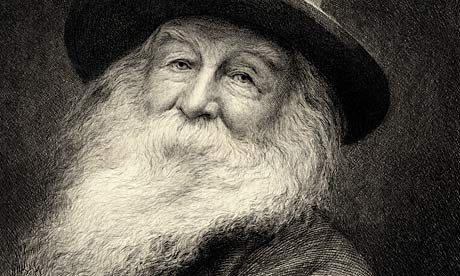
Whitman reinvents American poetry in this peerless self-performance, finding cadences that seem utterly his own yet somehow keyed to the energy and rhythms of a young nation waking to its own voice and vision. He calls to every poet after him, such as Ezra Pound, who notes in "A Pact" that Whitman "broke the new wood."
For full article see: http://www.guardian.co.uk/books/booksblog/2011/mar/11/best-american-poems
Saturday, 12 March 2011
A Homage to a World City.
This is one of the greatest opening film scenes ever made and it seems to evoke the quintessential nature of New York.
Thursday, 10 March 2011
Working to Live or Living for Work
Working to live or living for work? Sometimes the distinctions between these two become blurred especially in today's modern societies. The drive for success places real demands on the individual; it's so easy to become caught up in the whole relentless push for greater success. Yet does it all really matter at the end of the day. If one can find contentment in one's own life outside of work then isn't this the real touchstone.
A World Within a Language
"In order to translate, one must know a lot of things, most of them independent of mere grammatical competence."
"Every language expresses a different world view"
When I first came across these views by Umberto Eco, I couldn't help but think that he's onto something here. I work with second or third language users of English on a daily basis and these views have confirmed my thoughts; the more that is understood about the world view or culture of the foreign language then the easier the language becomes. In other words as a former tutor once said to me "focus on the person [and that person's world] and the language will take care of itself."
"Every language expresses a different world view"
When I first came across these views by Umberto Eco, I couldn't help but think that he's onto something here. I work with second or third language users of English on a daily basis and these views have confirmed my thoughts; the more that is understood about the world view or culture of the foreign language then the easier the language becomes. In other words as a former tutor once said to me "focus on the person [and that person's world] and the language will take care of itself."
Tuesday, 1 March 2011
Subscribe to:
Posts (Atom)